
"Envious": The wounds of the inner child

Life can have terrible timing, and this made in Argentina series captures that perfectly. It also captures the benefits of therapy, the work of understanding ourselves, and above all, the realization that life isn't a competition.

The series follows Vicky’s hectic life and her adventures after breaking up with Dani, her long-time boyfriend.
If you haven’t seen the series, you might be feeling the same way I did. I watched the Envidiosa teasers and thought, “Why is this character acting like this? Maybe they’re exaggerating.”
I gave it a chance, and even though the first few episodes didn’t quite win me over, I stuck with it because of the acting and the quality of the storytelling. And by the end of the first season, I was completely hooked!
The Lasting Effects of Childhood Trauma
Vicky’s adventures are interwoven with her interpretation—and, at times, her justification—of them to her therapist.
Vicky and her sister Caro suffered from their mother’s neglect, as she worked all day to support them. Their father abandoned them when they were young, and his absence caused them irreparable harm, while fueling Vicky’s desire to have the perfect family.
Throughout the series, the protagonist reveals, little by little, more about her dreams and longings to build a family. At the same time, the present reveals, through specific anecdotes, how she sought to compensate for her parents’ absence through her professional achievements, but also through attachments.
The episodes oscillate between tragedy and comedy. Vicky is a character who evolves, maintaining her essence but, above all, peeling back each layer of her traumas. Whether by revealing her wounds of self-worth, reaffirming that sense of protection toward her sister, or succumbing to the temptation of “scraping by" (in Spanish the term used is "migajero" which refers to settling for crumbles instead of fighting for the whole bread).
The Imposed Antagonism
It’s interesting to see how Vicky constantly compares her life to that of her friends and other women. Whether it’s because they’re mothers and she isn’t, because they’re engaged or married, because they’re thinner, or because they have something she desires—and so, in her mind, this means they’re winning at life.
Despite having a group of friends who offer sincere and constant friendship, and a close relationship with her younger sister, Vicky sometimes feels isolated, misunderstood, and alone.
It is in this context that the therapist serves a role that goes beyond mere support. By asking the right questions at the most opportune moments, Fernanda not only guides Vicky, but adds depth to her character.
Without giving away any spoilers, the very title of the series leads us to expect that Victoria will face conflicts, which in most cases are created by her own mind—a mind that is distrustful, fearful of abandonment, and driven by a hunger for success that also converts to social media image.
At various points in the series, Victoria is portrayed as envious, and it is precisely in understanding the origin of her explosive temper that the serie's great appeal lies on.
As a woman, I can confirm how society generates millions (through beauty, personal care, fashion, and other industries) by creating and fueling insecurities in us.
So if your hair is very curly, you have to straighten it, and if it’s very straight, you have to add volume. That blondes have more fun, but you shouldn’t worry so much about your appearance so as not to seem frivolous. Whether you are too thin, or that it’s better to hide your curves a little.

I loved this scene, because I’m sure we all know at least one woman like that—“light, ethereal, fleeting”—or at least, from the “outside,” we perceive them that way, as if they have a perfect life.
In season three (episode 3), Vicky gives a speech to Fernanda, her therapist, referring to a woman who makes her feel insecure and describes her as one of those “women we hate.” This term piques Fernanda’s curiosity, and she asks, “Who are these women we hate?” Vicky then paints a rather hilarious yet spot-on description.
I loved this scene, because I’m sure we all know at least one woman like that—“light, ethereal, fleeting”—or at least, from the “outside,” we perceive them that way, as if they have a perfect life. Who sees them that way? “We do… the ones who cry our eyes out with a bugger sticking out of our noses,” Vicky describes, referring to those of us who don’t live like goddesses, or who at the very least feel insecure when we see other women closer to what we’ve been sold as perfection.
Reality vs. Expectation
I really liked the way the series juxtaposes Vicky’s stories with her accounts during therapy sessions. It provides a very accessible context for what was going through her mind, or the emotional wounds that drove her actions in certain situations.
The story becomes very personal, as it includes her interpretation of the events—shared with Fernanda—while we watch the scene unfold. It’s reality versus what Vicky expected to happen.
The story becomes very personal, as it includes her interpretation of the events—shared with Fernanda—while we watch the scene unfold. It’s reality versus what Vicky expected to happen.
Similarly, I love how the series reflects those “coincidences” that aren’t always just that.
Throughout the four seasons, we see an important element: that the characters belong to generations that still pick up the phone to clarify situations, regardless of whether it’s a convenient time or not. As a Millennial, I can confirm that with younger generations, you have to let them know you’re going to call so they’ll answer, but in “Envidiosa,” that’s not the case.
With main characters who are Millennials or Gen X, emergencies or emotional moments arise, and the first thing they do is pick up the phone and call themselves.
Thus, we have scenes where Vicky, processing an important personal revelation, is abruptly interrupted by a call that shifts her perspective.
There’s a scene where Vicky plucks up the courage, and after a long, emotional conversation with her partner, she decides to pursue motherhood with the help of science. She had just found the calm and courage to do it when Caro called her and, without further ado, launched into a rant about the difficulties of being a mother. The timing is terrible... or perfect! Managing to slowly put into perspective that her ideas about motherhood are somewhat outdated, since she hadn’t revisited or questioned them since her childhood.
Real Moms
In the series, we see the different ways in which Vicky’s friends, her sister, and her own mother approach motherhood.
Without passing judgment on who is right or wrong, “Envidiosa” shows us how moms are subject to scrutiny for what they do and what they don’t.
I’m glad to see this perspective, and how there are some “girl, wake up and smell the coffee” moments that set aside the habit of romanticizing motherhood and its struggles—very much in line with our Ivy section, “Burned out Moms.”

Setbacks That Resonate
Trying not to give away any spoilers, especially from the last season, I can say that I felt personally addressed by it.
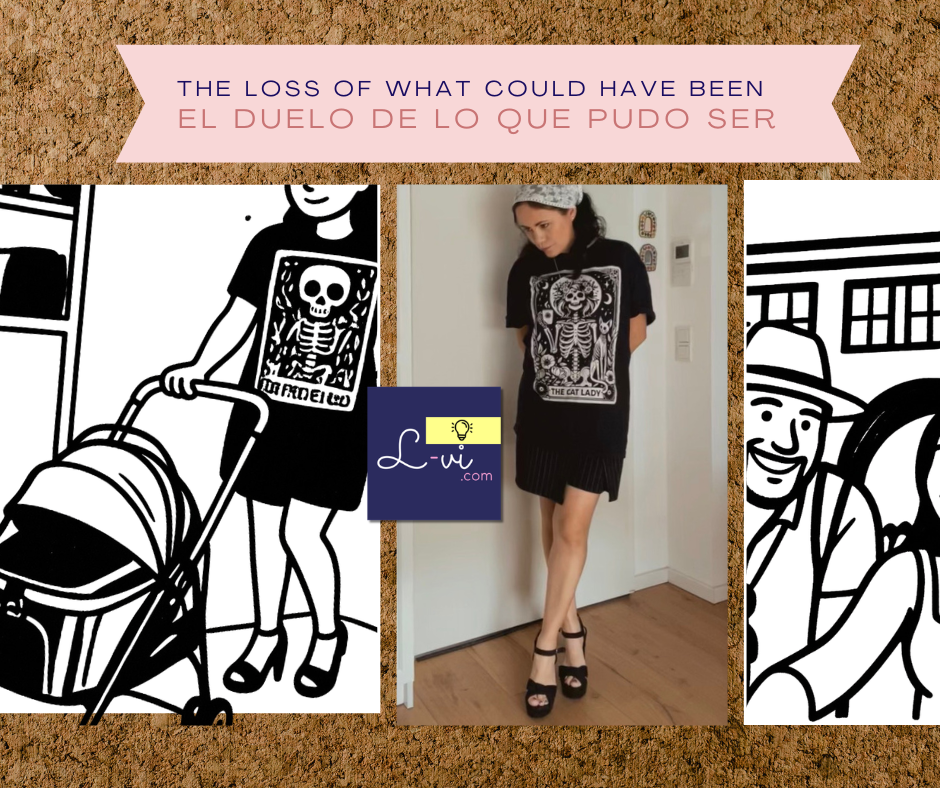
In my article, “Mourning What Might Have Been,” I talk about the process of accepting those plans, desires, and hopes that didn’t come to fruition. Precisely, at some point, as a result of her personal work during therapy, Vicky reevaluates her desires and her reality. It’s hard for her, because she avoids the questions posed by Fernanda, her therapist. Or rather, Vicky avoids the inevitable answers until she manages to “let go” of her ideas about how her life, a family, or her romantic relationship “should” be—so she can finally enjoy and appreciate everything she does have.
Vicky avoids the inevitable answers until she manages to “let go” of her ideas about how her life, a family, or her romantic relationship “should” be—so she can finally enjoy and appreciate everything she does have..
That scene where Vicky finally realizes just how beautiful her life is—just as it is, different from her expectations but imperfectly perfect—really resonated with me.
No matter how many times you’ve heard it, I’ll say it again: don’t compare yourself to other people! Don’t compare the little you know about other people’s lives to your own—be kinder to yourself!
If you’re going to evaluate your life, do so based on your values, your principles, and what makes you happy—not on what other people are doing or not doing.

At an age similar to Vicky’s, I admit that 60% of my life plans haven’t turned out the way I wanted them to, but that’s more than okay. In fact…There are some of them that, deep down, I’m actually grateful didn’t turn out the way I wanted them to 10 years ago or more, because they definitely weren’t my own true desires, or they just weren’t the right path for me.
What about you—have you seen “Envidiosa” yet? Did you find anything that resonated with you? Let me know in the comments.


Estuve mirando Loco 777 oficial juego y una cosa me quedó clara: no merece la pena inventar un número total de títulos cuando el propio operador no lo publica. Mi referencia fue lo que estaba visible en el lobby el 31 de agosto de 2026. Allí encontré novedades, fútbol, bingo, mesas en vivo, raspaditos y casual, seis formas distintas de recorrer el catálogo. También vi cinco proveedores: PG Soft, Pragmatic Play, JILI, TaDa y Gaming Panda. Yo suelo ir directamente al proveedor cuando ya conozco alguno, porque resulta más rápido que revisar todo. Las mesas en vivo me parecen una categoría que conviene mirar con una conexión estable. Deportes aparece aparte, con navegación propia. No tomaría esta composición como permanente: los estudios disponibles pueden cambiar. Por eso, antes de buscar un título concreto, revisaría directamente el lobby de la cuenta. Solo para mayores de 18 años.
Felicidades!! Muy lindo todo , gracias!!!🥰🤗❤️👏
Gracias!!
Muchas gracias!! Que bonito !!!😇🥰
Felicidades!!!!🥳
I was in tears even before playing the video! Recently started watching Bluey and to be honest I am saviouring every episode, making sure not to rush through them. Luce as a kid would have love it too! Without all the sometimes extreme drama cartoons such as "Candy", "Peline" and the anime series called in Spanish "La Ranita Demetan" displayed. I also remember feeling sad and stressed after watching some of them...But Bluey is so not like that. I am sure this is appreciated by kids and parents equally. Cheers to all healthy, innocent and non invasive copying mechanisms! And thanks for sharing this one! 😍