
100 years of solitude [Netflix]

This series adaptation of Gabriel García Márquez's book explores family loyalties and constraints, the formation of a community, and the portrayal of a variety of Latin American stories.
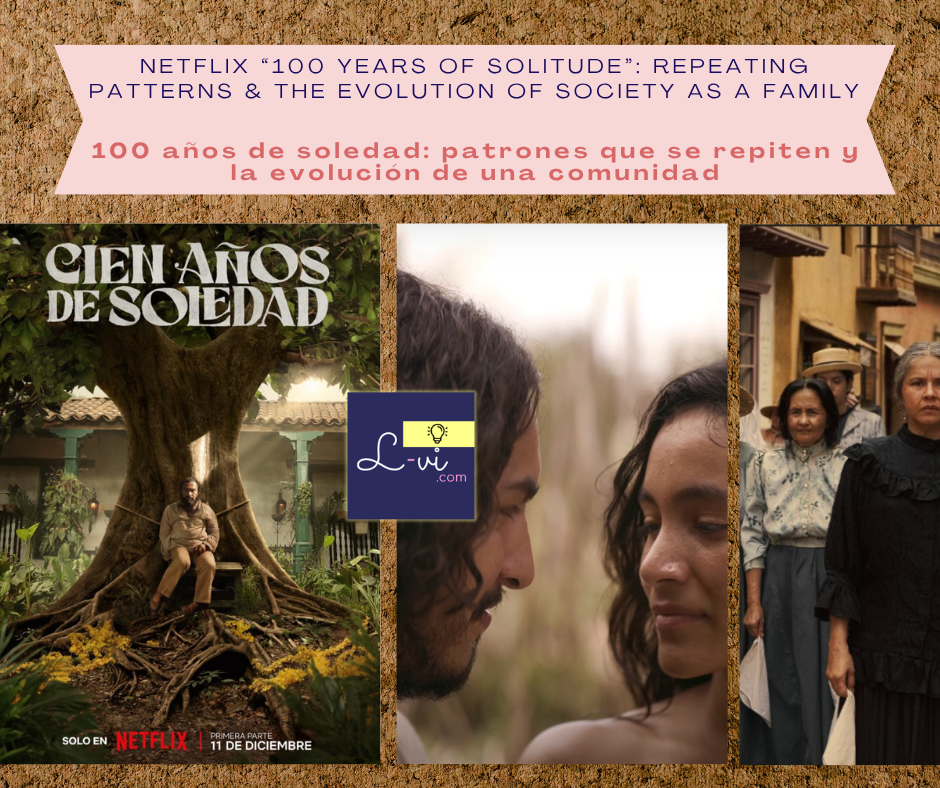
Gabriel García Márquez's (known as “Gabo” to his friends) acclaimed book follows the Buendía family and its complicated family tree, alongside the birth of Macondo, its development, and its demise.
The family's predispositions
I was deeply moved when Úrsula Iguarán’s mother said goodbye to her and told her that no matter where she went, her fate would follow her, as she placed her hand on her belly. Essentially, the mother was “casting” a curse on her—one that, while most people in the town believed it, Úrsula and José Arcadio also came to believe it fervently.
How incredible that the shame the mother felt was significantly greater than her love for her daughter. Not only did they disown her as a member of their family, but they also wished her ill as a way of confirming their belief that she had failed.
Now, don’t get me wrong—I’m not here to advocate for incest or anything like that. I’m just struck by the moment itself, when Úrsula’s mother “implants” in her the belief that misfortune will follow her to exact its revenge. And so, without questioning it, the young Úrsula, her eyes wide open, silently accepts her fate.
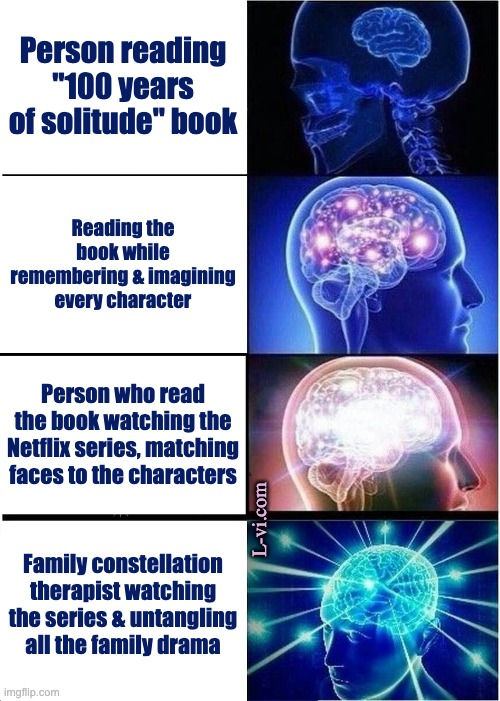
I couldn’t help but think of Family Constellations—labeled by psychologists as a form of pseudo-therapy—which asserts that we are capable, on an unconscious level, of internalizing structures and patterns within family relationships. It’s a form of unconscious memory that gives rise to emotional and cognitive schemas that influence our behavior.
Have you ever heard family stories that show a clear repetition of a behavioral pattern? For example: the boy who was born into his father’s “illegitimate” family, and who, years later, had two “wives” without them knowing it. Or the girl who fell in love with an emotionally unavailable man, resulting in a daughter who also repeated the pattern.
Less obvious events can also occur—ones that not even most of the family knew about. It is in these cases that family constellations make a lot of sense, because how could someone consciously repeat a pattern of behavior that they themselves didn’t even know existed?
That is precisely part of the story that repeats itself over and over again with the Buendías in One Hundred Years of Solitude. The details weren’t the same (not all of them married their cousins), but the same pain, the same sadness, loneliness, and outbursts infected them all.
The sharp rejection that led José Arcadio and Úrsula to leave their village was experienced in different ways by their children. Like a pandemic sweeping everything in its path, the Buendía family was fertile ground for the pathological behaviors that seemed to run in their blood. A strange mixture of courage, overflowing passion, and a timid yet noticeable void of a loving connection with their parents.
In one way or another, José Arcadio I, Aureliano I, Amaranta, and Rebeca carried the sadness of their parents, or the burden of their abandonment. And they passed that pattern on to their descendants.
Thus, among legitimate, adopted, and illegitimate children, the Buendías repeated the painful
-------------------
Spoiler alert
Warning: If you haven't read the book or watched the series, the section below contains spoilers. If you want to avoid them, click here to skip to the next section of this article.
I was struck by how, in the early generations, the Buendías do not openly mention the family’s “curse”; instead, they use shame and judgment to “warn” Rebeca and José Arcadio, whom they ultimately exclude from the family.
By the time of Arcadio I’s generation, Úrsula and José Arcadio Buendía chose to remain silent. Arcadio I never knew who his mother was, and it was precisely in her that he saw a spark of tenderness that he sought to take by force. Although he lived under the same roof, Arcadio I was not treated as an equal, and his need for affection and recognition led him to the books that gave him his first successes and a status beyond that of a “bastard.”
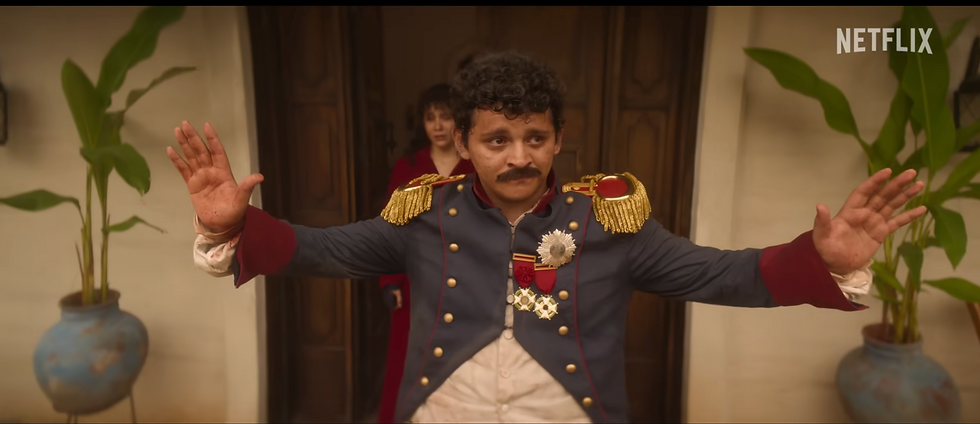
Amid the struggles for military control, Arcadio I took up arms and saw his chance for greatness, which once again ended in ridicule and sadness.
The cycle repeats itself when Meme is excluded from the family history by her own mother, Fernanda del Carpio, who could not accept that it was her daughter, of all people, who would bring the next “bastard” into the Buendía family. Fernanda, completely convinced of her noble lineage and rejecting the Buendía family for their lack of decency and religious obedience, chose to hide Aureliano Babilonia rather than face judgment.
And it wasn’t until the last generation that Doña Úrsula Iguarán explicitly warned that Aureliano and Amaranta could not be a couple. Aureliano II also sought to prevent this by sending her to study abroad.
Upon her return, with both of them strongly suspecting that they were related, they closed the circle that Úrsula and José Arcadio had begun a century earlier.
(End of spoiler.)
---------------------
The Evolution of Macondo: From Natural Laws to the Struggle for Power
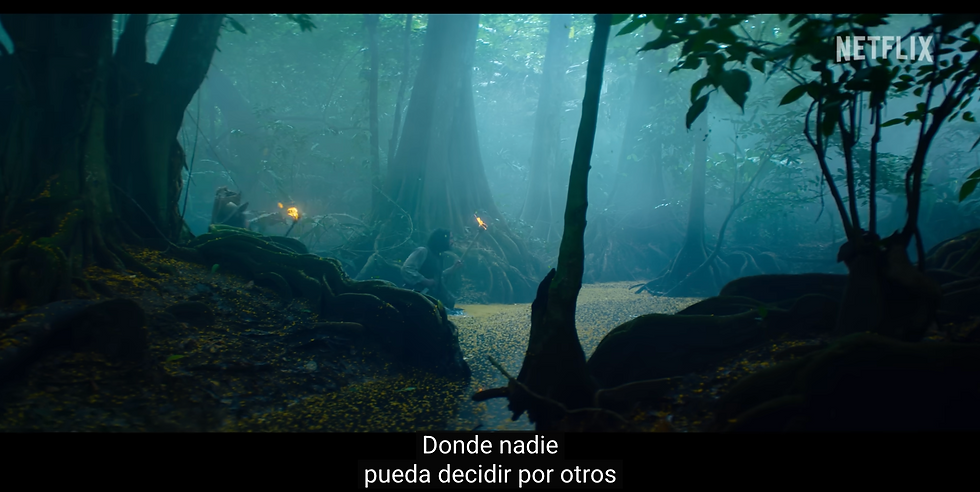
Macondo was founded by José Arcadio Buendía and a group of his friends, who set out on a journey to establish a town by the water and gain access to and connections with other regions of Colombia.
They were a close-knit group; everyone knew one another and traveled as a family, placing their trust in José Arcadio’s hopes, with a remarkable faith and loyalty that endured for at least the first two generations.
The founders of Macondo knew each other’s stories before they migrated; they supported one another, and together they built their homes, which were all distributed equally among them.
They did not need laws or weapons to act fairly and for the common good.
That reality was possible thanks to a sense of belonging, fairness, and equality. For everyone knew what it had taken to find a suitable place to settle after a long journey—without a map, without direction, and without any certainty that they would find what they were looking for.
The founding families focused on the survival of their people and needed no law other than their own decisions. José Arcadio and the other founders planned the streets and, as best they could, laid out what began as a settlement, grew into a village, and eventually became a town.
The Gypsies helped put Macondo on the map by sharing technology from other parts of the world and by spreading the news of its existence to other places.
With that “connection” to the world, nearly 30 years later, political structures arrived, personified by Apolinar Moscote. They appeared first timidly, then with weapons and decrees that broke with the
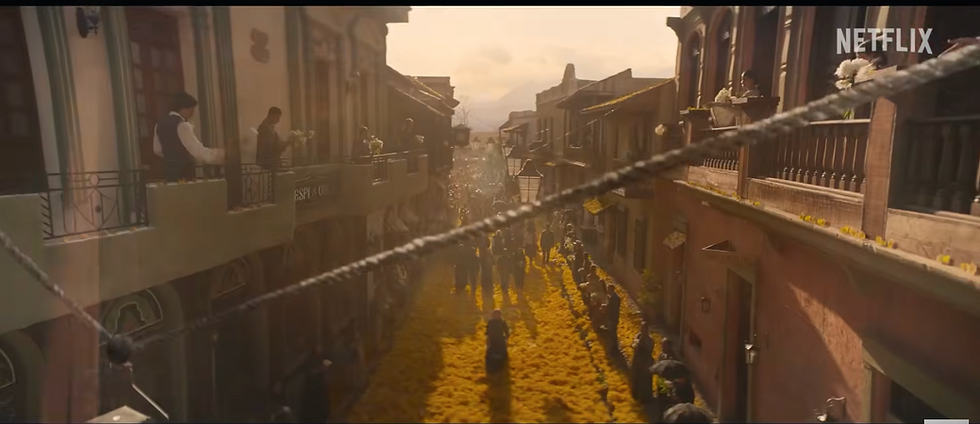
As Macondo’s society evolved—with its economic development, urban expansion, the arrival of the parish priest, and the establishment of laws and those who enforced them—the influence of the founding families waned. Likewise, the sense of community that had helped the people of Macondo act with the common good in mind—and what had until then been acceptable behavior without the need for external intermediaries—began to fade.
Through Colonel Aureliano Buendía’s reflections, it becomes clear how the revolutionary efforts—which arose from the pursuit of the common good—were tainted by the personal interests of their leaders.
Everyone seemed to be pulling in their own direction, using past abuses of power as a pretext to seize control and do the same.
I enjoyed the scene in which Claudio Cataño, who plays Colonel Aureliano Buendía, says, “Everything that happens to Macondo seems great to you because you’re ignorant.”
Thanks to the books of Melquiades and José Arcadio Buendía, as well as their self-taught spirit, various members of the Buendía family were knowledgeable about history, philosophy, and languages.
Their curiosity, adventurous spirit, and entrepreneurial drive led them to establish the school, the ice shop, a hospital, the construction of the church, and much more.
Another priceless scene that had me cheering was when Aureliano Babilonia (who for years had lived with the stigma of being a bastard and was constantly belittled by Fernanda del Carpio) broke his silence and put his uncle in his place in Italian. He left him speechless by pointing out that he also speaks German, English, French, and Latin better than he does.
The Buendías came to have a good understanding of the world; some of them were educated abroad, and they broadened their horizons just as José Arcadio had hoped. Unfortunately, what they didn’t know much about was their own family history and the sorrows they had been carrying with them. Power struggles are an important part of the story, whether they involve political power in Macondo or familial and/or romantic affection.
Spoiler alert
Warning: If you haven't read the book or watched the series, the section below contains spoilers. If you want to avoid them, click here to skip to the next section of this article.
Generation after generation, the Buendías seemed to pursue the truth of life without ever reaching it—and without sharing what they had learned! Just as José Arcadio seemed to have lost his mind by delving into and losing himself in Melquíades’ books, Colonel Aureliano witnessed the lack of moral compass among his supporters and saw the social decay that authoritarianism brought, losing himself for a time in that same hunger for violence.
Years later, José Arcadio II helped establish the banana consortium and witnessed the barbarity of its leaders. He fought to try to reverse the abuses of power, and when he failed miserably, he sought refuge in knowledge.
(End of spoiler). ------------
The relevance of the story
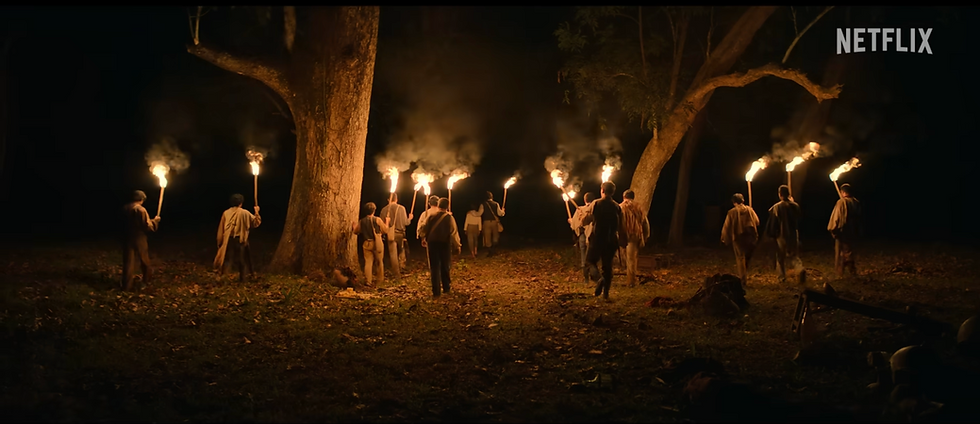
There are various factors that contribute to a work being considered a classic. One of them is the enduring relevance of the themes it addresses, maintaining a connection between the audience that experienced the work and realities of earlier eras and contexts different from the one in which it was created.
“One Hundred Years of Solitude” possesses this great quality: even though it was written in 1965, published in 1967, and adapted for television in 2026, its themes remain relevant.
Likewise, audiences will find connections to historical moments that could very well resonate throughout Latin America in the 20th century—just as they resonate in today’s world—capturing the interest of those who are just discovering this work by García Márquez and recognizing similarities in their own reality.
For example, García Márquez tells us how Macondo became a renowned banana producer and soon caught the attention of Americans, who established a robust and strict production and export plan. The people of Macondo, who had endured years of power struggles, fell into the hands of exploitative employers who did not recognize them as employees and, therefore, deprived them of the most basic rights.
This book is among the works that have been removed from school libraries in countries such as the United States, and given the variety of family, moral, and political themes it covers, this is hardly surprising.
In a global political climate in which the ravages of colonialism are more evident than ever, this book may make current hegemonic powers uncomfortable, thereby confirming its importance and relevance.
Did you enjoy this review? Let us know in the comments!
Subscribe to our newsletter, and stay on the know by receive seasonal updates from us. Follow us on Instagram: @lvi_blog.


Estuve mirando Loco 777 oficial juego y una cosa me quedó clara: no merece la pena inventar un número total de títulos cuando el propio operador no lo publica. Mi referencia fue lo que estaba visible en el lobby el 31 de agosto de 2026. Allí encontré novedades, fútbol, bingo, mesas en vivo, raspaditos y casual, seis formas distintas de recorrer el catálogo. También vi cinco proveedores: PG Soft, Pragmatic Play, JILI, TaDa y Gaming Panda. Yo suelo ir directamente al proveedor cuando ya conozco alguno, porque resulta más rápido que revisar todo. Las mesas en vivo me parecen una categoría que conviene mirar con una conexión estable. Deportes aparece aparte, con navegación propia. No tomaría esta composición como permanente: los estudios disponibles pueden cambiar. Por eso, antes de buscar un título concreto, revisaría directamente el lobby de la cuenta. Solo para mayores de 18 años.
Felicidades!! Muy lindo todo , gracias!!!🥰🤗❤️👏
Gracias!!
Muchas gracias!! Que bonito !!!😇🥰
Felicidades!!!!🥳
I was in tears even before playing the video! Recently started watching Bluey and to be honest I am saviouring every episode, making sure not to rush through them. Luce as a kid would have love it too! Without all the sometimes extreme drama cartoons such as "Candy", "Peline" and the anime series called in Spanish "La Ranita Demetan" displayed. I also remember feeling sad and stressed after watching some of them...But Bluey is so not like that. I am sure this is appreciated by kids and parents equally. Cheers to all healthy, innocent and non invasive copying mechanisms! And thanks for sharing this one! 😍